
How Much Does a CO2 Laser Cutter Cost in the UK? (2026 Guide)
The cost of a CO2 laser cutter in the UK spans anywhere from £3,000 for a compact desktop engraver to well over £30,000 for a full-scale industrial laser cutter. However, the upfront hardware price tag is only part of the equation.
This guide breaks down exactly what drives CO2 laser cutter prices in the UK, what you need to budget for beyond the hardware itself, and what five years of actual machine ownership really costs. Because a cheap initial quote means very little if the machine ultimately leaves you stranded.
CO2 Laser Cutter Price Ranges in the UK (2026)
| APPLICATION | BED SIZE | TYPICAL COST |
|---|---|---|
| Entry-Level / Desktop Engraver | 600 × 300mm | £3,000 – £6,000 |
| Small Business (Entry) | 600 × 400mm | £5,000 – £8,000 |
| Small Business / Schools | 600 × 900mm | £8,000 – £14,000 |
| Large Format / Production | 1300 × 900mm | £14,000 – £22,000 |
| Industrial / Max Capacity | 1600 × 1000mm | £22,000 – £30,000+ |
Note: These figures represent machine-only pricing. Remember to factor in extraction systems, consumables, delivery, initial setup and training.
At Focused Laser Systems, our industrial-grade CO2 laser cutters are available on finance starting from just £22.80 per week. Alternatively, if you’re looking for a budget-friendly alternative? Check out our refurbished CO2 Laser Cutters available from £2,500, backed by a 1-year warranty and lifetime technical support.
What Drives the Price of a CO2 Laser Cutter in the UK?
Two laser machines can look identical on paper but vary drastically in price. The cost difference comes down to five distinct variables hidden beneath the chassis. Understanding how these factors impact performance is the key to investing in a machine that scales with your business, rather than one that leaves you stranded.
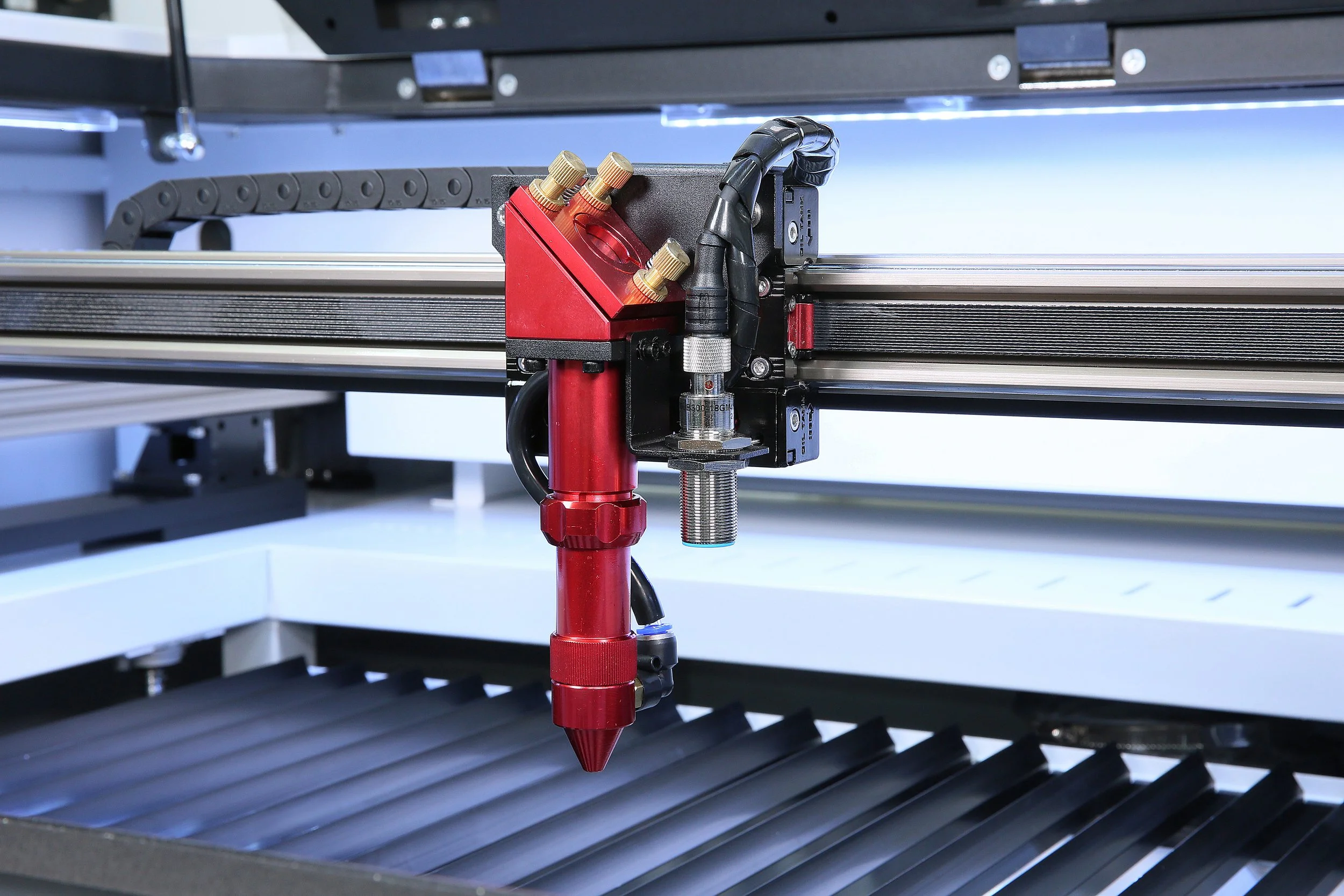
1. Laser Wattage (Power vs Speed)
Your CO2 Laser tube wattage is the single biggest driver of cutting and engraving performance, as well as the overall machine price. When choosing your power level, think of wattage as production throughput:
40W – 60W: Ideal for laser engraving and light cutting (e.g., up to 3mm plywood or acrylic at a moderate pace).
80W (Industry Standard): Cuts 3mm materials at more than double the speed of a 40W system, and comfortably handles 8–10mm thicknesses with clean edges.
130W+: Engineered for high-volume commercial workshops, making light work of heavy, dense materials that lower-powered tubes fail to penetrate.
In a commercial context, lower wattage means slower processing times. Choosing a laser machine that takes three times longer to complete a job creates an immediate bottleneck in your daily workflow.
2. Bed Size (Working Area)
When buying a CO2 laser cutter, your bed size dictates your production limits. Go too small, and you trap your team in a loop of manual sheet repositioning, inefficient multi-part cutting, or turning away lucrative, large-format jobs entirely.
To help you scale, here is how the most common UK CO2 laser bed sizes stack up:
600 × 300mm: A space-saving format ideal for engraving personalised gifts and prototyping.
600 × 900mm: The most versatile size on the market. It handles standard A2 sheet materials with ease, making it the go-to choice for schools and growing businesses.
1300 × 900mm: Engineered explicitly for sign-making, architectural panel work, and high-volume industrial production lines.
Why do larger beds cost more? You aren’t just paying for extra metal. To maintain pinpoint precision at a larger scale, a wider bed requires a significantly more rigid chassis, heavy-duty linear motion rails, increased laser wattage, and upgraded electronics.
3. Component Quality
The massive price gap across the CO2 laser market comes down to a simple reality: two machines can look identical on paper with the exact same bed size and wattage, but perform completely differently because of their internal components.
The Laser Tube: A cheap, unbranded glass tube can suffer power drops or burn out in under a hundred hours. A premium, brand-name RECI tube is engineered to deliver up to 1000+ hours of laser cutting and engraving.
The Motion Mechanics: Lower-tier systems rely on basic motors and flimsy rubber belts that stretch over time, causing the laser head to lose track of its position and ruin your workpiece. In contrast, premium laser systems use rigid steel linear rails, smart, closed-loop servo motors, and steel-reinforced belts.
What’s the difference? Think of it like getting a tattoo: you can choose an artist with a perfectly steady hand, or one whose hand shakes under pressure.
💡Buying Tip: If a seller offers only a 6-to-12-month warranty on an "industrial" machine, they are telling you exactly how long they expect those cheap components to last before they fail. At Focused Laser Systems, our CO2 laser cutters come with an industry-leading 2-year warranty.
4. Build Quality & UK Safety Certification
When buying a laser in the UK, safety standards aren't optional—they are a strict legal requirement. The official Laser Classification System ranks devices from Class 1 (safest) to Class 4 (open beam risk). Lower risk means higher manufacturing costs because engineering a fully sealed, fail-safe enclosure requires premium components.
The Gold Standard (Class 1): This is the non-negotiable benchmark when buying a laser cutter for a school, university, public space, or professional workshops. It proves the machine’s interlocked chassis completely contains the high-power beam, keeping the operator 100% safe.
The Commercial Risk: Cheap, uncertified imports lack proper UKCA/CE markings and fail to comply with UK safety laws. Operating one can completely invalidate your business or building insurance. If an accident or electrical fire occurs, your company is left exposed to massive financial and civil liability.
5. Technical Support & Training
A CO2 laser cutter is a machine with moving parts, optics, a consumable laser tube, and electronics — all of which need attention over time. The support model behind the machine is part of what you’re buying.
| SCENARIO | BUDGET MACHINE SUPPORT | PREMIUM MACHINE SUPPORT |
|---|---|---|
| When it breaks… | You send an email to a generic “info@” address, wait 3 days, and get a reply telling you to check a public forum. | You get direct access to UK-based, field-ready engineers, overnight parts distribution, and lifetime diagnostics. |
| Your Role | You become an accidental technician, spending hours diagnosing motherboard faults via YouTube. | Your team receives expert training from day one, backed by a service agreement built to keep you running. |
The Bottom Line: The price tag dictates how you handle downtime—whether you spend days troubleshooting independently or rely on a safety net designed to protect your daily revenue.
Take the Next Step with Focused Laser Systems
In a competitive commercial landscape, a cheap initial quote means very little if your equipment leaves you stranded mid-job. Investing in a CO2 laser cutter is about buying peace of mind, precision, and reliable UK technical support. Which is exactly what we deliver.
Our complete line of industrial-grade CO2 laser cutters are engineered to scale alongside your business. Protect your day-to-day cash flow with finance options starting at £22.80 per week, or secure high-spec hardware via our fully warrantied refurbished range starting at £2,500.
📩 Let’s talk specs. Get in touch with our team today for a transparent, tailored quote or to book a live machine demonstration.
Frequently Asked Questions
How much does a CO2 laser cutter cost in the UK?
CO2 laser cutters range from approximately £3,000 for an entry-level desktop machine to £30,000+ for large-format industrial systems. Most small businesses and schools are looking at the £6,000–£15,000 range for a mid-size machine with professional specification and proper support.
What should I ask a UK laser cutter supplier before buying?
Always ask: Is the machine strictly Class 1 safety certified? Is a software license included? Are spare parts stocked here in the UK for overnight delivery? Crucially, ask if their technical support is handled by UK-based engineers. Any reputable supplier should also invite you to a live showroom demonstration to test-cut your specific materials before you commit.
